
Most roofing companies get their leads one of two ways.
Word of mouth. Or paid ads.
Word of mouth is slow and unpredictable. Paid ads stop the moment you stop paying. Neither one builds anything lasting, and neither puts you in control of how many leads you get next month.
There’s a third way. One that compounds over time, generates leads while you sleep, and gets more cost-efficient the longer you invest in it.
It’s called SEO. And for roofing companies specifically, it’s one of the most powerful lead generation investments available, because homeowners are already searching for exactly what you offer, every single day, in your exact service area.
This guide covers everything. How roofing SEO works, what it includes, what results to expect, how much it costs, and how to get started. By the end, you’ll have a complete picture of what a proper roofing SEO strategy looks like, and what it takes to execute one.
What Is SEO for Roofing Companies?
SEO, search engine optimisation, is the process of improving your roofing company’s visibility in Google’s search results so that homeowners searching for roofing services in your area find your business first.
For roofing companies, this breaks down into two primary objectives:
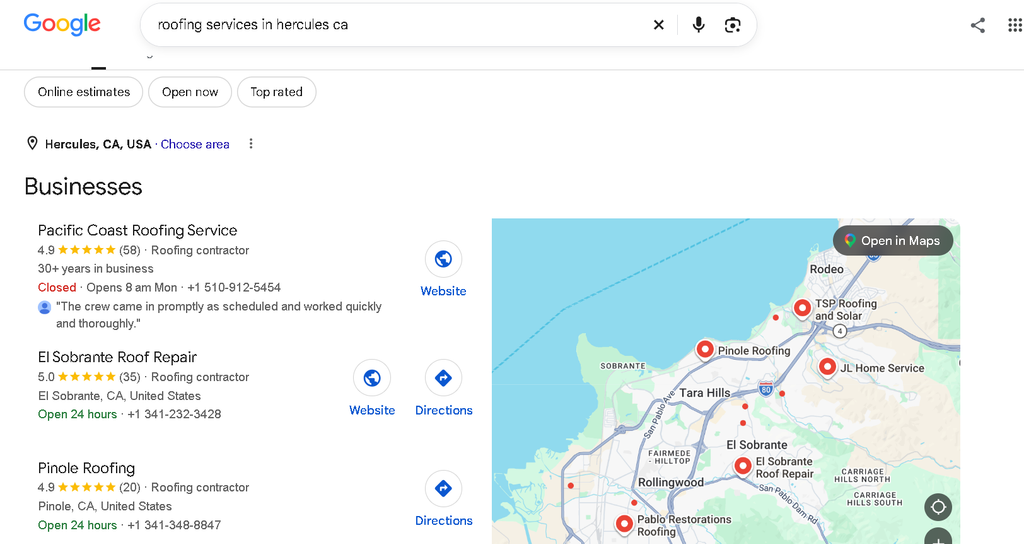
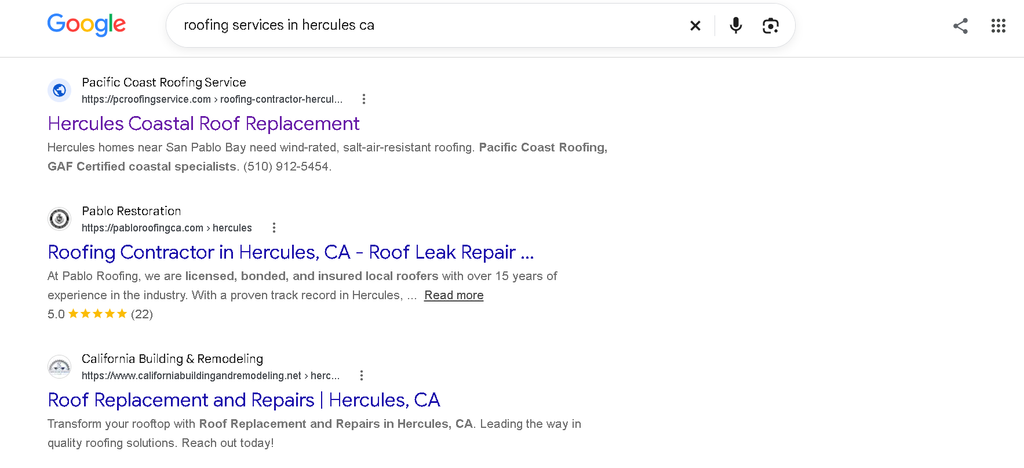
Ranking in the Google Maps local pack, the block of three businesses that appears near the top of search results when someone searches “roofer near me” or “roof repair [city].” This is the most visible, highest-converting position in local roofing search.
Ranking in organic search results, the traditional blue-link results below the map pack. These capture homeowners searching for specific services, researching costs, or looking for information before they’re ready to call.
Both positions are valuable. Both are achieved through different but complementary signals. And together, they create a roofing company that dominates its local Google presence across every stage of the customer search journey.
Read: How SEO Helps Roofing Companies Win More Local Leads
Why SEO Is the Right Long-Term Investment for Roofing Companies
Before getting into the how, it’s worth being clear on the why.
Roofing searches are high-intent. A homeowner typing “roof repair near me” is not browsing. They have a problem, they need it solved, and they’re ready to call. These are warm leads landing directly in your lap, if you’re visible when they search.
Job values are significant. A single roofing repair job might be worth $500–$2,000. A full replacement could be $8,000–$25,000 or more. A single SEO-generated lead that converts can justify months of investment instantly.
Most local roofers are doing SEO poorly. In most markets, the majority of roofing companies have incomplete Google Business Profiles, thin websites, and no real content strategy. The bar for entering the local pack is often lower than in more marketing-sophisticated industries. You don’t need to outspend your competitors, you need to out-execute them.
SEO compounds in ways paid ads never can. A Google Ads campaign delivers leads today and nothing tomorrow if you pause it. An SEO investment made today continues to generate leads next year, and the year after. The value accumulates rather than resetting.
You’re not dependent on any single channel. Businesses that rely entirely on word of mouth or paid advertising are vulnerable. One slow referral month or one algorithm change in the ad auction and leads dry up. SEO creates a lead channel you own, independent of ad spend, algorithms, or referral relationships.
The Complete Roofing SEO Strategy: Every Component Explained
Component 1: Google Business Profile Optimisation
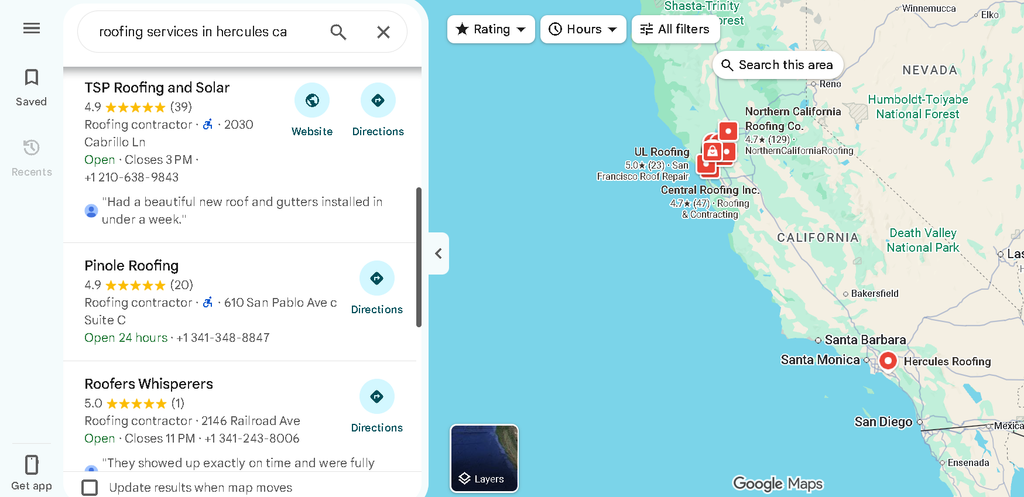
Your Google Business Profile is the single most important asset in your roofing SEO strategy. It’s what appears in the local pack. It shows your rating, phone number, address, and photos before a homeowner ever clicks through to your website.
A fully optimised roofing GBP includes:
The right primary category. Select “Roofing Contractor” as your primary business category. This is the most critical categorisation decision you’ll make, it defines which searches Google considers your listing relevant for.
Secondary categories that expand your reach. Add every applicable secondary category: Gutter Cleaning Service, Waterproofing Service, Building Restoration Service, Siding Contractor, Chimney Services. Each one extends the searches your profile appears for.
A complete service list. List every roofing service you offer as individual entries, Roof Repair, Roof Replacement, Flat Roofing, Emergency Roof Repair, Storm Damage Repair, Commercial Roofing, Guttering and Fascias, Chimney Repair, Fascias and Soffits, Roof Inspection. Each service entry increases your profile’s relevance for specific searches.
A well-written business description. 750 characters covering your services, your area, your experience, and your differentiators. Written naturally for a homeowner reading it, not stuffed with keywords.
Accurate, consistent contact information. Business name exactly as it appears everywhere else. Local phone number. Precise address. Updated hours.
A service area that reflects your real coverage. Define every town, suburb, and postcode you serve. This extends your local pack visibility across your full geographic territory.
A strong photo library. Minimum 25 photos, branded vehicles, team members, job site before-and-afters, completed projects. Add new photos regularly. Before-and-after roofing photos are among the most compelling trust signals available to a roofing contractor.
Regular Google Posts. Post weekly, completed jobs with photos, seasonal maintenance reminders, storm damage alerts, service spotlights. Weekly posts signal an active, credible business to both Google and prospective customers.
Component 2: Roofing Website Optimisation
Your website is your primary organic ranking asset and the destination where GBP traffic converts into leads. A thin, generic roofing website undermines every other SEO effort. A well-built, locally-optimised one amplifies all of them.
Individual service pages for every roofing service.
This is the most impactful single change most roofing websites need.
One “Services” page listing everything cannot rank for service-specific searches. Each core service needs its own dedicated page, optimised for its specific keyword:
- Roof Repair, [City]
- Roof Replacement and Installation
- Flat Roofing Services
- Emergency Roof Repair
- Storm Damage Roof Repair
- Commercial Roofing Contractor
- Guttering and Fascia Installation
- Chimney Repair and Repointing
- Roof Inspection Services
Each page should cover the service thoroughly, include natural location references, address the questions homeowners commonly ask about that service, include customer testimonials relevant to that job type, and end with a clear, friction-free call-to-action.
Location pages for every area you serve.
If you serve ten towns but only have your main address on your website, you are effectively invisible in nine of them.
Build a dedicated location page for each town and suburb in your service area:
- “Roofing Contractor in [Town A]”
- “Roof Repair in [Town B]”
- “Emergency Roofer in [Town C]”
Each location page should be genuinely useful, not a template with only the town name swapped. Include local references, specific services available in that area, local customer reviews where possible, and a location-specific call-to-action.
Technical SEO that search engines can read.
The most compelling content on a technically broken website will not rank. Technical foundations matter:
- Unique, keyword-rich title tags on every page
- Descriptive meta descriptions that drive click-through
- Logical H1, H2, H3 heading structure on every page
- Fast loading speed, test with Google PageSpeed Insights
- Mobile-first design, the majority of roofing searches happen on mobile
- SSL certificate, the security padlock non-negotiable for trust and ranking
- Clean URL structure, /roof-repair-london/ not /page?id=47
- XML sitemap submitted to Google Search Console
- No broken links, no duplicate content, no orphaned pages
LocalBusiness and RoofingContractor schema markup.
Structured data added to your website’s code that explicitly tells Google you’re a roofing contractor, your address, phone number, service area, hours, and services offered. Supports local pack visibility and rich search result appearances.
Click-to-call functionality on every page.
Your phone number should be tappable on mobile, one tap connects the homeowner to your line. No copying. No dialling. One tap. Roofing is an urgent need. Friction costs jobs.
Clear conversion architecture throughout.
Every key page should have one primary call-to-action, “Call for a Free Quote,” “Request a Roof Inspection,” “Get an Emergency Callout.” Visitors who have to hunt for how to contact you will call a competitor whose website makes it easier.
Component 3: Local Citation Building
Local citations are online mentions of your roofing company’s name, address, and phone number, collectively called NAP.
Google cross-references your NAP across dozens of third-party platforms to verify your business is legitimate and located where you claim. Inconsistencies, even minor formatting differences, create conflicting signals that suppress your local pack ranking.
Where roofing companies need citations:
General directories: Yelp, Yellow Pages, Bing Places, Apple Maps, Facebook Business, Foursquare
Trade and home improvement platforms: Checkatrade, Rated People, MyBuilder, Angi, HomeAdvisor, Houzz, Thumbtack, Bark, TrustATrader
Roofing and construction specific: NFRC member directory, regional roofing associations, manufacturer approved installer directories
Local: Chamber of Commerce, local business associations, regional trade directories
NAP consistency is the rule without exceptions.
Before building new citations, audit existing ones. Search your business name and check what’s out there. Correct every inconsistency, different phone format, abbreviated address, old trading name. Then maintain one master NAP format used identically across every platform.
Component 4: Google Review Strategy
For roofing companies, Google reviews are a ranking signal and a conversion tool simultaneously.
They improve your position in the local pack. And they determine whether a homeowner calls you or your competitor right next to you in that pack.
A homeowner choosing between two roofing contractors, one with 11 reviews at 3.7 stars, one with 84 reviews at 4.9 stars, makes that call in seconds. Reviews are doing the selling before your phone rings.
Building a strong review profile systematically:
Ask after every job, directly, face-to-face, at the moment of peak satisfaction when the homeowner is standing in front of their finished roof.
Send a direct review link, generated from your GBP dashboard, via text or email within 24 hours of job completion. One tap to the review form. Zero friction.
Automate the follow-up, use your job management software to send an automated review request 24–48 hours after job completion for every customer who hasn’t already responded.
Respond to every review, thank positive reviewers personally and specifically. Address negative reviews professionally and invite resolution offline. Response rate is an active signal of profile management.
Build consistently, ten reviews per month for twelve months significantly outperforms one hundred in one month then silence. Consistent recency signals a consistently active, trading business.
Never fake it, bought reviews or incentivised reviews violate Google’s policies. Detection is increasingly sophisticated. A listing suspension removes your entire local search presence instantly. The risk is never justified.
Component 5: Roofing Content Marketing
The majority of roofing company websites contain five pages.
Five pages cannot build the topical authority required to rank competitively for a broad range of roofing keywords. Content marketing, blog articles, FAQs, guides, project case studies, builds that authority by expanding your website’s coverage of the topics your customers search for.
High-value content for roofing company websites:
Informational articles targeting research searches:
- “How much does a roof replacement cost in [city]?”
- “Signs your roof needs replacing, and when to call a roofer”
- “Flat roof vs pitched roof, which is right for your property?”
- “How long does a roof replacement take?”
- “What to do immediately after storm damage to your roof”
- “Does home insurance cover roof damage? What roofers want you to know”
- “How to find a reliable roofing contractor, 8 things to check”
Comparison and decision-support content:
- “Roof repair vs roof replacement, how to know which you need”
- “Different types of roof tiles and which lasts longest”
- “EPDM vs felt flat roofing, which should you choose?”
Local and project-specific content:
- “Roofing projects we’ve completed in [local area], case studies”
- “Common roofing problems in [city/region] and how to fix them”
- Seasonal content, “Preparing your roof for winter in [area]”
Each article targets a specific search query, answers it genuinely and thoroughly, and creates an additional entry point for homeowners to find your business through organic search.
Over time, this content library creates dozens of ranking opportunities, each one a potential lead from a homeowner at a different stage of their decision process.
Component 6: Local Link Building
Links from credible external websites to yours signal authority to Google. Locally relevant links carry particular weight for local pack ranking, they build the “prominence” signal that determines your position relative to competitors with similar relevance and distance scores.
Learn: How to Get Your Roofing Company to Rank on Google Maps
Where roofing companies should build links:
Roofing and trade associations, NFRC membership, regional roofing bodies, approved contractor schemes. High-authority, highly relevant. These should be your first priority.
Manufacturer approved installer programmes, GAF, Velux, IKO, Marley, Redland, and other roofing material manufacturers maintain approved installer directories. If you install their products, get listed. These links are industry-relevant and trusted.
Local business partnerships, estate agents, property managers, building surveyors, insurance loss adjusters, and property developers regularly work with roofers. Online mentions and links from their websites carry local relevance.
Community involvement, local sponsorships, charity support, and community events create mentions from locally trusted organisations. Genuine community presence is one of the clearest local prominence signals.
Local press, significant projects, storm response initiatives, and community contributions can earn local newspaper coverage. Local news links carry strong domain authority.
Supplier networks, local builders’ merchants and roofing supply companies sometimes list their contractor customers. A link from a recognised local supplier adds both relevance and locality signals.
Avoid link schemes, paid links, and any tactic that produces links at scale from unrelated websites. In a sector where your local search presence is your primary lead channel, a Google penalty has direct, immediate revenue consequences.
Component 7: Roofing SEO Reporting and Measurement
SEO that isn’t measured isn’t managed. Without proper tracking, you can’t identify what’s working, what needs adjusting, or whether your investment is generating the leads it should.
What roofing companies should track monthly:
Google Business Profile performance, views, direction requests, phone calls, and website clicks from your GBP listing. These metrics show whether your profile is converting searchers into customer actions.
Organic traffic, total sessions from organic search, landing pages receiving traffic, and trends over time. Growing organic traffic alongside stable or improving conversion rates indicates the strategy is working.
Phone call tracking, a tracked number specific to your roofing website attributes incoming calls directly to organic search. This is the clearest measurement that SEO is generating real business leads.
Keyword rankings, your position for primary and secondary roofing keywords across your service area. Tracked using a local rank tracking tool rather than a manual search, which only shows results for your exact location.
Local pack position, whether you appear in the three-pack for target searches, at what position, and across what geographic coverage within your service area.
Review growth, new reviews per month, average rating trend, and response rate.
Conversion rate, what percentage of organic website visitors make contact. If traffic grows but leads don’t, your website’s conversion architecture needs attention.
Roofing SEO Keyword Strategy: What to Target and Why
Not all roofing keywords are equal. A complete roofing SEO strategy targets three keyword categories, each representing a different stage of the homeowner search journey.
High-Intent Local Keywords (Highest Priority)
These trigger the local pack and convert at the highest rate. Target these first.
- “roofing contractor near me”
- “roofer near me”
- “roof repair [city]”
- “roof replacement [city]”
- “emergency roofer [area]”
- “local roofing company [city]”
- “roofing company [suburb]”
Service-Specific Keywords (High Priority)
These target homeowners with a specific need. Each requires a dedicated service page.
- “flat roof repair near me”
- “emergency roof repair [city]”
- “commercial roofing contractor [area]”
- “roof tile replacement [city]”
- “guttering installation near me”
- “chimney repair [area]”
- “storm damage roof repair [city]”
- “metal roofing installation [area]”
Research and Informational Keywords (Supporting Priority)
These capture homeowners earlier in their journey and build authority. Target these with blog content.
- “how much does a roof replacement cost”
- “signs you need a new roof”
- “how long does a roof last”
- “roof repair vs replacement”
- “how to find a reliable roofer”
- “does home insurance cover roof damage”
- “flat roof vs pitched roof”
A complete roofing SEO strategy addresses all three categories, creating visibility across the full homeowner search journey from early research through to ready-to-call.
Roofing SEO Timeline: What to Expect and When
One of the most common reasons roofing companies don’t get results from SEO is stopping too early. Understanding the realistic timeline prevents this.
Month 1: Strategy and foundation. GBP audit and optimisation. Website technical audit and fixes. Citation audit and building begins. Initial keyword research and content plan created. No significant ranking changes yet, the infrastructure is being built.
Month 2: Foundation complete. Full citation profile built. GBP optimisation complete with photos and posts live. First content pieces published. Early ranking signals beginning to register.
Month 3: Early momentum. GBP visibility improving noticeably. Long-tail keyword rankings beginning to appear. First organic traffic increases visible in analytics.
Months 4–5: Acceleration. Local pack appearances for lower-competition and long-tail searches. Review profile strengthening. Organic traffic growing consistently. First regular organic leads beginning.
Months 5–8: Establishment. Local pack visibility for primary service keywords. Consistent organic lead flow established. Content library building topical authority. Link building compounding.
Months 8–12: Compounding returns. Strong, stable local pack positions. Multiple keyword rankings across service and location terms. SEO becoming the most cost-efficient lead channel. Cost per lead reducing month over month.
Month 12+: Sustained dominance. Established positions that take competitors significant time to displace. Content interest delivering enquiries across dozens of search queries. The business has a lead asset, not just a lead channel.
The roofing companies that reach month 12 with dominant positions all committed at month one and didn’t evaluate the investment against a three-month timeline.
How Much Does Roofing SEO Cost?
Roofing SEO costs vary based on your market competitiveness, the scope of work required, and the agency you work with.
Here’s a realistic breakdown by investment level:
$300–$600 per month, Foundational
Appropriate for new or small roofing companies in low-competition regional markets. Covers GBP setup and basic optimisation, NAP audit and citation building, basic on-site optimisation, and monthly reporting. Limited content and link building at this level.
$600–$1,200 per month, Standard
The right level for established roofing companies in moderate-competition markets. Covers full GBP management, comprehensive citation building, on-site optimisation across all service pages, regular content creation, review acquisition strategy, and monthly reporting tied to lead metrics.
$1,200–$2,500 per month, Comprehensive
Appropriate for roofing companies in competitive urban markets, larger operations serving multiple areas, or companies targeting high-value commercial roofing alongside residential. Covers everything in standard plus active link building, location page development, content marketing at scale, and advanced technical SEO.
$2,500+ per month, Enterprise
Multi-location roofing groups, large commercial roofing contractors, or companies combining SEO with paid search and full digital marketing management.
The right question isn’t which costs less, it’s which delivers a better return.
A roofing company generating two additional jobs per month from SEO, at an average value of $3,000 each, is generating $6,000 in monthly revenue from an investment of $800–$1,200. That’s a return multiple most other marketing channels can’t match, and one that improves month over month as rankings compound.
Roofing SEO vs. Google Ads: The Honest Comparison
Many roofing companies ask this question before investing. Here’s the direct answer:
| Factor | Roofing SEO | Google Ads |
| Time to first leads | 3–6 months | 24–48 hours |
| Cost per lead over time | Decreases as rankings build | Constant or rising |
| Results when you stop | Gradual decline | Immediate disappearance |
| Local pack visibility | Yes, included | No, separate from map pack |
| Patient trust perception | Higher | Lower, “Sponsored” label |
| Long-term asset value | High | Zero |
| Best for | Sustainable lead generation | Immediate leads |
The smartest approach for most roofing companies: run Google Ads for immediate leads while SEO builds in the background. As organic rankings strengthen over 6–12 months, reduce paid spend on keywords where organic visibility now exists. Over 12–18 months, SEO becomes the primary, most cost-efficient lead channel, and Google Ads becomes a supplemental tool for new service launches, peak seasons, or specific high-value job types.
How to Choose the Right Roofing SEO Agency
Not every agency offering SEO for roofing companies understands roofing, or local SEO. Here’s how to evaluate before you sign.
Ask for roofing-specific case studies. Not just general SEO results, actual roofing company rankings, local pack entries, and lead volume increases. A credible roofing SEO agency can show you specific outcomes from similar clients.
Ask what’s included every month. You’re paying a monthly retainer. Know exactly what work is being done for it. A clear monthly deliverables list is the minimum standard. Vague answers are a red flag.
Ask how they measure success. The answer should reference phone calls, leads generated, and GBP performance, not just keyword rankings and traffic. Rankings are a means. Leads are the end.
Ask about their approach to your specific market. A credible agency will assess your local competition and current online presence before recommending a strategy. A generic proposal that could apply to any roofing company anywhere suggests they’re selling a product, not solving your specific problem.
Check their own online presence. An SEO agency that ranks poorly for its own keywords is a credibility concern. Not a dealbreaker, but worth noting.
Look for transparent reporting. Monthly reports that clearly show what was done, what moved, and what the impact was on leads. No reporting or opaque reporting are both red flags.
How Bryeno Delivers Roofing SEO That Generates Real Leads
At Bryeno, we build roofing SEO strategies around one outcome: more qualified local leads for your roofing business.
We’re not a generalist agency that handles roofing alongside dozens of unrelated industries. We understand local search, we understand trade businesses, and we build strategies that reflect the specific dynamics of roofing, high-intent local searches, significant job values, urgent need conversion, and the competitive reality of most local roofing markets.
Every Bryeno roofing SEO engagement includes:
Google Business Profile management, full optimisation, weekly posts, photo strategy, review response, and monthly GBP performance reporting.
Roofing website optimisation, individual service pages, location pages, technical SEO, schema markup, mobile performance, and Core Web Vitals compliance.
Local citation building, systematic NAP consistency across all relevant general, trade, and roofing-specific directories. Ongoing monitoring and correction.
Content strategy and production, blog articles, service page expansions, and FAQ content targeting the specific roofing searches your local customers are making. Written to E-E-A-T standards, not generic content farm output.
Review acquisition system, a structured, repeatable process for generating consistent Google reviews that compound your ranking signals and convert searchers into callers.
Local link building, targeted acquisition of trade association links, manufacturer approved installer directories, local business partnerships, and community mentions.
Lead-focused reporting, monthly reporting tied to calls generated, GBP actions, organic traffic growth, ranking movements, and lead attribution. Not vanity metrics, business outcomes.
Full-service integration, for roofing companies that want SEO alongside Google Ads, social media management, and website development, we manage every channel as a coordinated system. Your marketing investment compounds rather than competing with itself.
Book your free roofing SEO consultation with Bryeno, we’ll audit your current local search presence, benchmark you against your top local competitors, identify exactly where you’re losing leads online, and give you a clear, honest strategy for winning them back.
No generic pitch. No one-size-fits-all package. Just a direct conversation about what your roofing company needs to generate more leads from Google.
Frequently Asked Questions
Q1: How does SEO help roofing companies get more leads?
SEO improves your roofing company’s visibility in Google search results, both in the local map pack and in organic listings below it. Homeowners searching for roofing services in your area find your business when they search. Because these are high-intent searches, people who need a roofer now, ranking prominently converts directly into phone calls and quote requests. The higher and more consistently you rank, the more leads you receive, without paying for each individual click.
Q2: How long does roofing SEO take to start generating leads?
Initial ranking improvements typically appear within 60–90 days of starting a proper roofing SEO strategy. Consistent, regular leads from organic search and the local pack generally begin at the 3–6 month mark in moderate markets. Highly competitive urban markets may take 6–12 months to achieve strong, stable positions for primary roofing keywords. The timeline depends on your starting point, local competition, and the consistency of your optimisation work.
Q3: What is the most important part of SEO for roofing companies?
Google Business Profile optimisation is typically the highest-priority starting point, it directly drives local pack ranking, which is where the highest-converting roofing searches land. After GBP, Google reviews, NAP citation consistency, and individual service pages on your website are the next most impactful elements. A complete roofing SEO strategy addresses all components, but GBP is where most roofing companies gain the fastest initial traction.
Q4: How much does SEO for a roofing company cost per month?
Professional roofing SEO services typically range from $300 per month for foundational work in low-competition markets to $2,500+ for comprehensive campaigns in highly competitive urban areas. The right investment level depends on your market, your current online presence, and your growth targets. The more relevant question is: what does a new roofing job worth $3,000–$10,000 justify in monthly SEO investment to generate it consistently?
Q5: Can a small roofing company compete with larger ones using SEO?
Yes, and this is one of the genuine advantages of local SEO for smaller operators. A small roofing company with a fully optimised GBP, a strong review profile, and well-built local service pages can outrank a larger competitor with a bigger brand but weaker local SEO signals. Google’s local ranking algorithm prioritises relevance, proximity, and prominence, not company size or ad budget. Execution quality is what matters.
Q6: Should a roofing company do SEO or Google Ads first?
For most roofing companies, the optimal approach is both, in sequence. Start Google Ads for immediate lead flow while SEO builds over 3–6 months. As organic rankings strengthen, reduce paid spend on keywords where organic now covers them. Redirect that budget toward new high-value keywords or seasonal campaigns. Over 12–18 months, SEO becomes your primary, most cost-efficient lead channel. Roofing companies that invest in only one channel are either leaving immediate leads on the table or building nothing lasting.
Q7: What keywords should a roofing company target for SEO?
A complete roofing keyword strategy covers three categories. High-intent local searches, “roofer near me,” “roof repair [city]”, for local pack ranking. Service-specific searches, “flat roof repair,” “emergency roof repair [area]”, for dedicated service pages. Research queries, “how much does a roof replacement cost,” “signs you need a new roof”, for blog content. Together, these create visibility across every stage of the homeowner search journey.
Q8: Do roofing companies need a blog for SEO?
Yes, if it’s done properly. A blog that publishes generic, thin content infrequently adds minimal value. A content strategy that consistently publishes useful, accurate articles targeting specific roofing search queries builds topical authority over time, creates multiple additional ranking opportunities, and attracts homeowners earlier in their decision process. Over 12 months of consistent content publication, a roofing company website can rank for dozens of search queries that generate regular, organic inbound leads.
Conclusion: SEO Is the Lead Generation System Your Roofing Company Deserves to Own
Word of mouth is valuable. Paid ads have their place. But neither gives you control over your lead volume, and neither compounds in value over time.
SEO does both.
A roofing company with a dominant local search presence owns a lead generation asset. It generates enquiries around the clock, improves in efficiency over time, and creates a competitive position that’s genuinely difficult for competitors to displace quickly.
The homeowners who need a roofer tomorrow are searching today. They’re typing “roofer near me” right now. The question is whose phone rings when they do.
The answer is determined by who has invested in local SEO, and who hasn’t.
Every month without a roofing SEO strategy is a month of leads going to someone else. Every month with one is a month of building an asset that generates more leads at a lower cost than the month before.
Bryeno builds roofing SEO strategies that generate real leads, not just rankings.
Talk to Bryeno today and get a free roofing SEO audit, find out exactly where your company stands and what it takes to dominate your local market.